
When Sensitivity Is a Gift: Why Sensitive People Often Become Compassionate Healers

Sensitivity is not something to overcome. When understood, nurtured, and grounded, it can become one of our greatest strengths.
If you have spent years believing you are “too sensitive,” the very quality you tried to overcome may be one of your greatest strengths.
I know what it is like to hear:
“You need a thicker skin.”
“You’re too emotional.”
“You take everything so personally.”
For many years, I believed sensitivity was something I needed to overcome. I admired people who seemed unaffected by criticism or conflict and wondered why I experienced the world so deeply.
Looking back, I see something very different.
What I once considered a weakness became one of my greatest gifts.
My sensitivity wasn’t something that needed fixing.
It needed understanding.
What Does It Mean to Be a Highly Sensitive Person?
The term highly sensitive person is commonly used to describe someone who experiences and processes their surroundings deeply. In research, a related concept is called sensory processing sensitivity, a personality or temperament trait involving differences in how people respond to environmental and emotional experiences.
Research suggests that people vary in their sensitivity to both difficult and supportive environments. Sensitivity may create vulnerability to stress under challenging conditions, while also allowing someone to benefit especially deeply from positive, nurturing experiences. Researchers continue to study the trait and acknowledge that important questions remain. (Review of sensory processing sensitivity research)
Being highly sensitive is not a medical or mental-health diagnosis. Nor does every person who calls themselves sensitive have exactly the same experience.
For some, sensitivity may include noticing subtle changes in people and surroundings. For others, it involves deep emotional processing, strong empathy, creativity, or becoming overwhelmed in busy environments.
Some people also understand their sensitivity spiritually. They may describe themselves as intuitive, spiritually sensitive, energy-sensitive, or an empath.
These spiritual descriptions are meaningful to many people, but they are not identical to the research concept of sensory processing sensitivity. Both perspectives can be honored without presenting them as the same thing.
At its heart, sensitivity is a way of experiencing and responding to life more deeply.
Signs You May Be a Highly Sensitive Person
Sensitivity can appear differently in different people, but you may recognize some of these experiences:
You notice subtle changes in another person’s expression, tone, or mood.
Crowded, noisy, or emotionally charged environments can feel overwhelming.
You need quiet time to restore yourself after being around others.
Beauty, music, animals, nature, and acts of kindness affect you deeply.
Conflict stays with you long after it has ended.
You think carefully and process experiences deeply.
People naturally turn to you when they need comfort or understanding.
You feel a strong desire to help, encourage, teach, or care for others.
You sometimes have difficulty separating your feelings from what others are experiencing.
You experience intuitive impressions or inner knowing that can be difficult to explain.
A person does not need to identify with every item on this list to consider themselves sensitive. These experiences can also arise for many different reasons, including temperament, stress, trauma, anxiety, neurodivergence, or other individual circumstances.
The purpose of understanding sensitivity is not to place ourselves in another restrictive category. It is to develop greater self-awareness and discover what helps us flourish.
Why Sensitive People Often Doubt Themselves
Sensitive children are not always raised by people who understand their way of experiencing the world.
They may be told they are overreacting, imagining things, or making life unnecessarily difficult. They may learn that expressing deep feelings makes other people uncomfortable.
Little by little, they begin questioning themselves.
Instead of thinking:
“I experience the world deeply,”
they begin believing:
“Something is wrong with me.”
Some learn to hide their feelings. Others build walls around their hearts in an attempt to become stronger. Many ignore their intuition because they cannot explain it logically or because the people around them do not understand.
But sensitivity does not disappear simply because we stop trusting it.
It waits for us to understand it differently.
The Greatest Transformation I Witnessed
Years ago, when I began teaching psychic development classes, I noticed something that surprised me.
People certainly learned to recognize and trust their intuitive senses. They discovered that intuition could be cultivated through awareness, practice, discernment, and trust.
But that wasn’t the greatest transformation.
The greatest transformation was watching people realize they were okay.
Again and again, students shared stories of growing up feeling different.
Some had been told they were imagining things. Others had learned to ignore their inner knowing because their families didn’t understand. Many had spent years believing there was something wrong with them.
Then something beautiful happened.
They found themselves sitting in a room with people who had experienced many of the same things.
For the first time, they didn’t feel strange.
They felt understood.
You could almost see the relief on their faces as they realized they were not alone. What they had spent years trying to hide might be one of the gifts they had come here to share.
That realization was every bit as healing as learning to trust their intuition.
This is my lived observation as a spiritual teacher, rather than a scientific conclusion. Yet it has remained one of the most meaningful lessons of my ministry:
Sometimes healing begins when someone finally discovers they were never broken.
The Hidden Gifts of Highly Sensitive People
Sensitivity is not necessarily about being fragile.
It is about being deeply aware.
Sensitive people may listen beneath the words. They notice subtle changes in expression, tone, posture, and atmosphere. They often recognize when someone needs compassion more than advice.
Some research has found associations between sensory processing sensitivity and brain activity related to awareness, empathy, and the processing of social and emotional information. These studies are interesting but still represent a developing field rather than a final explanation of sensitivity. (Research on sensitivity and responses to others’ emotions)
In everyday life, sensitive people may have a natural ability to:
Listen without judgment
Notice what remains unspoken
Offer genuine empathy
Recognize emotional shifts
Create spaces where others feel safe
Connect deeply with animals and nature
Bring creativity and beauty into ordinary life
Honor another person’s individual journey
These qualities can help people feel seen, heard, and understood.
In a world that often moves too quickly, sensitivity invites us to slow down and truly notice one another.
Why Sensitive People May Be Drawn to Healing
Not every sensitive person is called to become a healer, counselor, teacher, minister, or spiritual practitioner.
Yet in my experience, many sensitive people are naturally drawn toward roles in which they can care for and support others.
Their empathy may help them appreciate another person’s experience. Their awareness may allow them to notice what is not being said. Their compassion may create an atmosphere where someone feels safe enough to become honest, vulnerable, and open to change.
Sensitive people may become Reiki practitioners, energy healers, therapists, nurses, coaches, caregivers, teachers, artists, ministers, or trusted friends.
The title is not what makes someone a healing presence.
Healing sometimes begins through a thoughtful conversation.
Sometimes through prayer.
Sometimes through creative expression.
Sometimes through silence.
Sometimes it begins when another person finally feels seen.
A compassionate practitioner does not need to have every answer. Often, the greatest gift is the ability to be present without rushing to fix, judge, or control another person’s journey.
Sensitivity alone, however, does not make someone an effective healer. Training, ethical practice, boundaries, discernment, humility, and self-awareness are also essential.
When Sensitivity Feels Like a Burden
Sensitivity can be a beautiful gift, but that does not mean it always feels easy.
Sensitive people may become overwhelmed by constant noise, conflict, crowded spaces, distressing news, or demanding schedules.
Because caring comes naturally, healthy boundaries can feel uncomfortable or even unkind. Some sensitive people spend years rescuing everyone around them while neglecting themselves. Others assume responsibility for emotions, problems, and outcomes that were never theirs to carry.
Without grounding and discernment, sensitivity can contribute to:
Emotional overwhelm
Compassion fatigue
Exhaustion
Difficulty saying no
Overcommitting
Avoiding necessary conflict
Taking responsibility for other people’s happiness
Losing touch with one’s own needs
Confusing fear or anxiety with intuition
These experiences do not mean sensitivity is a flaw.
They remind us that every gift needs care, wisdom, and balance.
Sensitivity Needs Healthy Boundaries
A beautiful garden flourishes not because someone pulls on the flowers to make them grow, but because the conditions are right.
The same is true for sensitive people.
Sensitivity becomes more life-giving when we create supportive conditions around it. This might include:
Making room for quiet and rest
Spending restorative time in nature
Noticing what drains or nourishes us
Pausing before saying yes
Accepting that compassion does not require rescuing
Recognizing which feelings and responsibilities belong to us
Limiting exposure to environments that continually overwhelm us
Practicing grounding, prayer, meditation, or mindful breathing
Seeking qualified support when distress interferes with everyday life
Boundaries do not make us less loving.
They help us remain present without losing ourselves.
The goal is not to become less sensitive. The goal is to become so deeply rooted that our sensitivity can become one of our greatest strengths.
Sensitivity, Intuition, and Discernment
Many sensitive people also describe experiencing intuition. They may receive an inner nudge, sense that something is not quite right, or know what someone needs before it is spoken.
These experiences can be spiritually meaningful. They should also be approached with discernment.
Not every strong feeling is intuitive guidance. Sometimes it reflects fear, past experiences, anxiety, nervous-system activation, assumptions, or concern for another person.
Discernment grows when we slow down and become curious.
We might ask:
Does this guidance feel calm and clear, or urgent and fearful?
Is this feeling mine, or did it arise after entering a particular environment?
Am I sensing something, or am I making an assumption?
Do I need to act now, or can I wait for greater clarity?
What practical information should I consider alongside my intuition?
Healthy intuition does not require us to abandon reason.
It invites us to develop a respectful relationship among inner knowing, lived experience, spiritual practice, and practical wisdom.
Healing Begins With Wholeness
One of the greatest lessons a sensitive person can learn is that we are not here to carry the world.
We are here to become fully ourselves.
As we learn to care for our own hearts, sensitivity begins to feel different.
Instead of absorbing every emotion, we develop discernment.
Instead of trying to rescue others, we discover the quiet strength of being present.
Instead of apologizing for who we are, we begin recognizing how sensitivity contributes to our relationships, creativity, calling, and spiritual life.
Healing is not about becoming less sensitive.
It is about becoming more rooted, whole, and able to live with sensitivity wisely.
The stronger our roots, the more freely our gifts can blossom.
Perhaps You Have Been Carrying a Gift All Along
If you have spent much of your life believing you were too sensitive, I would like to gently offer another possibility.
Perhaps you were never too sensitive.
Perhaps the people around you simply did not understand the way you experienced the world.
Perhaps what once felt like a burden also contained the beginning of a gift:
A gift that allows you to notice beauty.
To offer compassion.
To listen deeply.
To create spaces where others feel safe.
To bring light into places that need it most.
Like a flower turning naturally toward the sun, your gifts were never meant to be forced.
They needed understanding, care, and the right conditions in which to blossom.
The world does not need fewer sensitive people.
It needs more people who understand how to live wisely with the sensitivity they carry.
Frequently Asked Questions About High Sensitivity
Is being highly sensitive a weakness?
No. Sensitivity can bring challenges, including overwhelm and emotional fatigue, but it may also support empathy, creativity, careful observation, and meaningful relationships. The key is learning how to care for your sensitivity rather than judging or suppressing it.
Is being highly sensitive a diagnosis?
No. The phrase highly sensitive person is not a medical or mental-health diagnosis. Sensory processing sensitivity is studied as a personality or temperament trait. If sensory or emotional experiences cause significant distress or interfere with everyday life, speaking with a qualified healthcare or mental-health professional may help identify what support is needed.
Is being an empath the same as being a highly sensitive person?
Not necessarily. Many people identify with both terms, but they do not describe exactly the same concept. Highly sensitive person is associated with the research concept of sensory processing sensitivity. Empath is generally a personal or spiritual description used by people who feel deeply affected by others’ emotions. Both perspectives may be meaningful, but they should not automatically be treated as interchangeable.
Why do I feel emotions so deeply?
People experience emotions differently because of temperament, personality, life experience, stress, environment, and many other factors. Feeling deeply does not automatically mean something is wrong. If emotions regularly feel unmanageable or interfere with daily life, compassionate professional support can be valuable.
Can highly sensitive people become healers?
Yes. Many sensitive people are drawn to healing and caregiving roles. Empathy, careful observation, and deep listening can be meaningful strengths. Sensitivity alone does not qualify someone to practice professionally, however. Appropriate education, ethical standards, boundaries, discernment, and self-awareness remain essential.
How can I stop absorbing everyone else’s emotions?
Begin by checking in with yourself regularly. Notice how you feel before and after particular conversations or environments. Quiet time, journaling, movement, prayer, meditation, grounding, and clearer boundaries may help you distinguish compassionate awareness from taking responsibility for another person’s experience.
How can I tell the difference between intuition and anxiety?
Intuition is often experienced as quiet and clear, while anxiety may feel repetitive, urgent, or driven by fear. This is not a perfect rule. Give yourself time, consider the practical facts, and notice whether the impression remains after your emotions settle. If anxiety is persistent or disruptive, seek support from a qualified professional.
A Gentle Reflection
Find a quiet place and take a slow breath.
Place one hand over your heart and reflect:
When do I first remember feeling too sensitive?
Who taught me that this part of me needed to change?
What if they simply did not understand the way I experienced the world?
When has my sensitivity helped me notice, comfort, create, or understand something important?
What boundaries would help my sensitivity feel more life-giving?
How might my life change if I honored my sensitivity instead of apologizing for it?
Allow whatever arises to be received with kindness.
Perhaps nothing about this part of you ever needed fixing.
Perhaps it has simply been waiting to be understood and welcomed home.
A Quiet Moment
If there is one thing I hope you carry with you, it is this:
You are not too much.
You never were.
The qualities that may have caused you to feel different or misunderstood may also be the qualities that allow you to love deeply, notice beauty, listen carefully, and bring comfort to others.
The next time someone tells you that you are too sensitive, pause before allowing those words to become part of your identity.
Instead, gently ask:
What if this sensitivity is one of the ways my soul experiences the world?
Be patient with yourself.
Like every flower in nature, you do not blossom by force.
You blossom because, little by little, you learn to trust the Light that has always been growing within you.
A Closing Blessing
May you see yourself with gentleness.
May you trust the wisdom of your sensitive heart.
May you discover that what once felt like a burden also held the seeds of one of your greatest gifts.
And may you continue blossoming into the beautiful Light you were created to share.
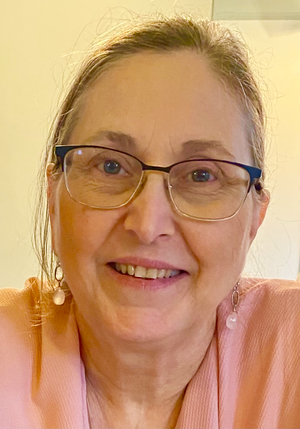
About Rev. Sue Freeman
Rev. Sue Freeman is an ordained interfaith minister, spiritual teacher, Certified Empowerment Coach and Reiki Master Teacher with decades of experience in spiritual development and healing practices. Through her work with Blossoming into Light, she helps sensitive and intuitive people understand their gifts, develop discernment, and build greater trust in themselves.
Explore our spiritual coaching at https://www.blossomingintolight.org/coaching