

Embodied Reiki Practice: 7 Foundations for Grounded Energy Healing
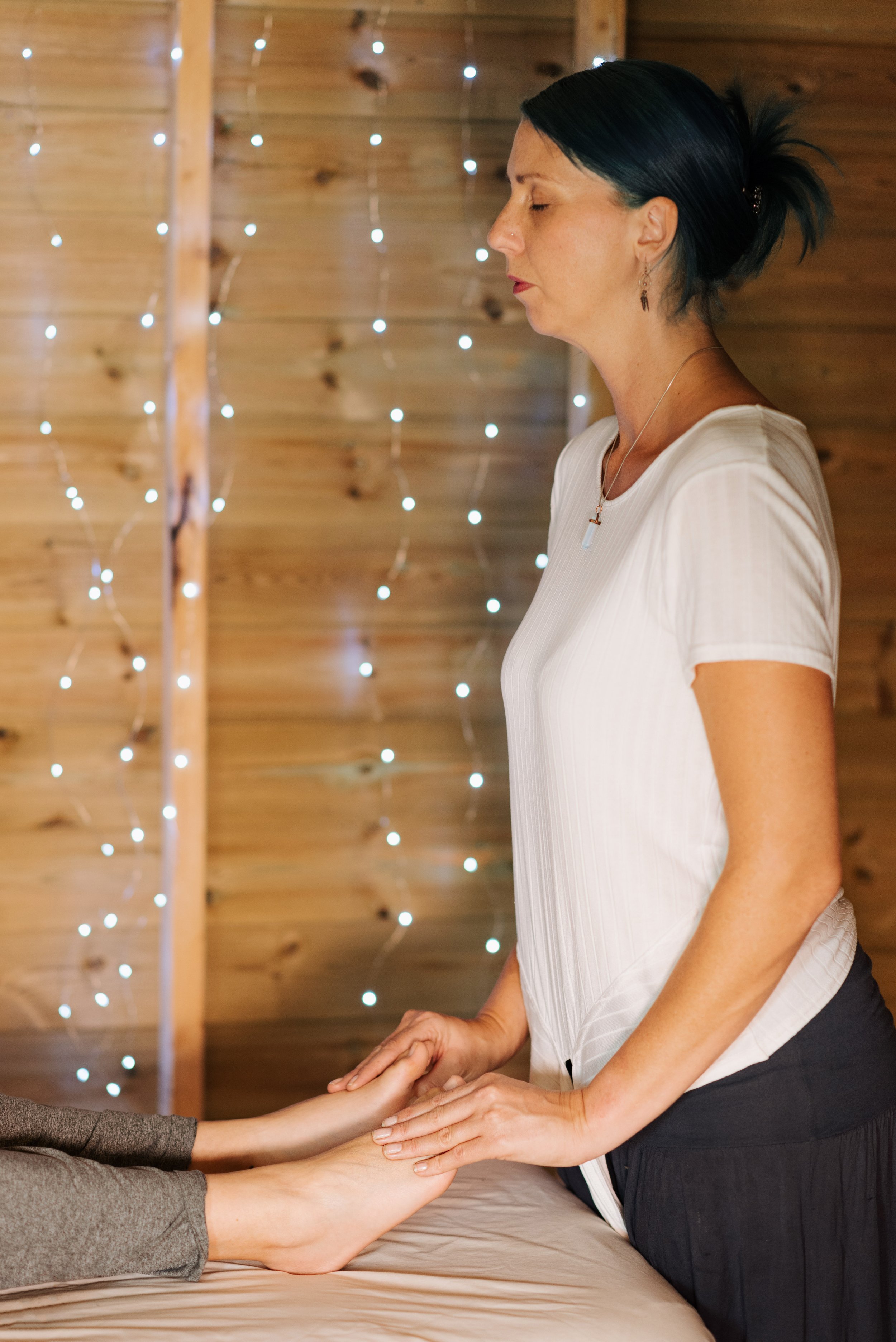
Grounded practitioner embodiment in Reiki practice, supporting integration and presence.
In the evolving landscape of energy healing, technique alone is no longer enough. What transforms a session from procedural to profound isn’t how many symbols we know or how intuitively we channel energy — it’s how deeply we are embodied while we practice.
An embodied Reiki practice isn’t simply about placing hands or following a protocol. It’s about inhabiting our own system while we facilitate energy: staying grounded, maintaining ethical clarity, and allowing Reiki to move through a steady, conscious practitioner.
Reiki has always been subtle. But subtle does not mean ungrounded. And intuitive does not mean uncontained.
As practitioners and teachers, we’ve seen the difference embodiment makes — not only in session quality, but in practitioner longevity, boundaries, and spiritual maturity. This is the shift many modern practitioners are being called into: integration over intensity.
What Is Embodied Reiki Practice?
Embodied Reiki practice is the integration of traditional Reiki with somatic awareness, nervous system wisdom, and practitioner self-leadership.
Rather than doing Reiki from an overly mental, disconnected, or “floating” state, embodiment means we remain present inside our own body while facilitating energy flow.
In a grounded practice, our awareness includes:
Breath rhythm and depth
Physical posture and muscle tone
Internal emotional state
Nervous system activation level
Energetic boundaries
Client pacing and cues
Presence, ethics, and containment
Embodiment means we are not hovering above the work. We are rooted within it.
If you teach or practice in spaces that value trauma-informed energy healing, this matters deeply: the practitioner’s state becomes part of the energetic environment. When we are regulated, steady, and ethically contained, people often feel safer — and safety supports deeper integration.
Why Embodiment Matters in Reiki Practitioner Development
Early in Reiki practitioner development, the focus often lands on technique: hand positions, attunements, symbols, intuition, messages. These are foundational. But without embodiment, Reiki can become mechanical — or the practitioner can become energetically overextended.
Embodiment stabilizes spiritual gifts.
When practitioners aren’t grounded, a few common patterns can emerge:
Over-giving and depletion
Absorbing client material
Blurred energetic boundaries
Inflated intuitive interpretation
“Pushing” for results
Nervous system fatigue
Spiritual bypassing (without realizing it)
We name this without alarm and without judgment. Many of us learned through experience. The point isn’t perfection — it’s maturation.
An embodied Reiki practice protects both practitioner and recipient. It supports ethical Reiki practice that is rooted in steadiness rather than spiritual intensity.
Nervous System Wisdom in Energy Healing
Energy healing does not occur in isolation from the body. Your body is the vessel through which your presence is communicated.
In Reiki, “nervous system wisdom” can be understood as this:
your inner state influences the field you create.
If we’re rushing, strained, dissociated, or trying to “make something happen,” the session can start to feel uncontained — even if the intention is pure.
Embodied practice means we track signals like:
Breath shortening
Jaw clenching
Tight shoulders
Over-focusing
Emotional pulling
Speeding up to avoid feeling
And when we notice activation rising, we regulate first.
Regulation is leadership.
Embodied, trauma-aware Reiki doesn’t chase catharsis. It supports integration. We allow energy to unfold at the pace the system can meet with steadiness.
How to Develop an Embodied Reiki Practice (Step-by-Step)
This is the practical core. Use this as a repeatable ritual, not a one-time fix. Embodiment is built through repetition.
Step 1: Regulate Before You Begin (2–3 minutes)
Before a session, pause. Do not begin from urgency.
Try this:
Feel your feet on the floor
Lengthen your exhale (slower out-breath)
Drop your shoulders away from your ears
Widen your gaze (peripheral vision)
Name one simple truth: “I am here.”
This signals safety to your system.
We don’t open sessions from effort. We open from steadiness.
Step 2: Set the Container (Ethical + Energetic)
Embodiment isn’t only physical — it’s also ethical.
Silently orient to:
“I do not carry what isn’t mine.”
“I witness, I don’t absorb.”
“I allow the session to unfold.”
A clear inner container supports ethical Reiki practice and reduces over-merging.
Step 3: Track Your Body While You Channel
As you move through hand positions, check in gently:
Am I breathing?
Is my belly soft or braced?
Am I leaning forward in effort?
Do I feel expanded or contracted?
Am I trying to force a result?
Embodied Reiki practice includes monitoring internal shifts.
If you notice striving, soften.
Reiki does not need force. Presence is enough.
Step 4: Use the Body to Hold Boundaries
Healthy boundaries are felt somatically.
Notice cues like:
Chest tightening when someone shares something heavy
Abdomen contracting when intensity rises
Throat tension when you want to “fix”
A pulling sensation that makes you overreach
These signals don’t mean you’re doing it wrong. They mean you’re getting information.
When you feel it:
ground → exhale → widen awareness → reconnect to your own center.
This is practitioner embodiment in action.
Step 5: Match the Pace (Integration Over Intensity)
One of the most powerful shifts in Reiki is learning to slow down.
Instead of “more energy,” try:
Longer stillness at each hand position
A softer gaze
More silence
Less interpreting
Less “performing” Reiki
Embodiment often looks like simplicity.
Step 6: Close the Session With Containment
To avoid energetic “leakage,” close intentionally:
Take one slow breath with your hands off the body
Feel your feet
Briefly acknowledge the work is complete
Return attention to your own center
Containment is not cold. It’s respectful.
Step 7: Integrate After Sessions (5 minutes)
Practitioner embodiment continues after the session ends.
Choose 2–3 of these:
Wash hands slowly and intentionally
Step outside or look into natural light
Move your spine or shake out arms
Drink water with attention
Journal one insight (not the whole session)
Integration prevents buildup and supports long-term practitioner development.
Signs You’re Moving Into Deeper Practitioner Embodiment
Embodied Reiki practice often develops gradually. Signs include:
You feel calm rather than euphoric after sessions
You trust subtlety without needing dramatic sensation
You interpret less and witness more
Your boundaries feel simpler, not rigid
You recover more quickly between clients
Your sessions feel spacious rather than intense
A quiet maturity emerges.
As practitioners deepen, their work becomes less performative and more grounded. Less proving. More presence.
This is grounded spiritual leadership.
The Evolution of Reiki: From Channeling to Integration
The Reiki community is evolving.
In earlier eras, emphasis often leaned toward heightened sensitivity, psychic development, or dramatic energetic experiences. Intuition remains valuable — but many practitioners are now recognizing the need for ethical grounding, somatic awareness, and sustainable practice.
Embodied Reiki practice reflects this evolution.
We are not moving away from spirituality. We are refining it.
Integration replaces intensity
Containment replaces overwhelm
Ethics replace ego
Spiritual maturity is not measured by how much energy moves — but by how safely it integrates.
Guided Reflection: Return to the Body
Pause.
Place one hand on your chest and one on your abdomen. Feel the rhythm beneath your palms.
Ask yourself:
Where do I leave my body during sessions?
When do I feel most grounded in my practice?
What does regulated presence feel like in me?
Embodiment grows through awareness, not criticism.
Journaling Questions for Practitioners
What sensations tell me I’m grounded before beginning Reiki?
What do I notice in my body during emotionally intense sessions?
Where might I be over-efforting in my practice?
What would a slower, more integrated session look like?
How do I integrate after sessions — and what’s missing?
Frequently Asked Questions
Is embodied Reiki practice different from traditional Reiki?
Embodied Reiki practice doesn’t replace traditional Reiki. It deepens it by integrating somatic awareness, ethical containment, and nervous system wisdom into established Reiki methods.
Is this a medical approach?
No. This article is offered in a spiritual and wellbeing context for practitioner development and grounded presence. It is not medical advice or a medical treatment model.
Can embodiment support better session experiences?
Often, yes. When the practitioner is grounded and steady, recipients may feel safer and more able to integrate the session gently and sustainably.
How long does it take to develop practitioner embodiment?
Embodiment is ongoing. It matures through repetition, reflection, and consistent regulation practices. Development isn’t linear — it deepens over time.
What if I feel activated during a session?
Pause internally, soften your breath, widen awareness, and return to your feet. You don’t need to “push through.” Regulation is part of ethical leadership.
Integration Is the Real Mastery
We often remind our students: mastery in Reiki isn’t about expanding your reach. It’s about deepening your roots.
An embodied Reiki practice helps practitioners serve for years — even decades — without burnout, inflation, or energetic depletion. It strengthens ethical Reiki practice and supports grounded spiritual leadership in a rapidly expanding field.
Reiki is subtle. The nervous system is wise. When both are honored, practice becomes steady, sustainable, and deeply transformative.
Embodied Reiki practice is not a milestone. It’s a way of being.
Gentle Invitation
If you feel called to deepen your practitioner embodiment, explore our advanced Reiki integration trainings and practitioner development pathways inside Blossoming into Light Ministry.
You don’t need more intensity.
You need deeper integration.
Question for you:
What’s one moment in a session when you notice yourself leaving your body — and what helps you come back?