

The Beguines: Medieval Women Who Lived asMystics, Healers, and Spiritual Trailblazers
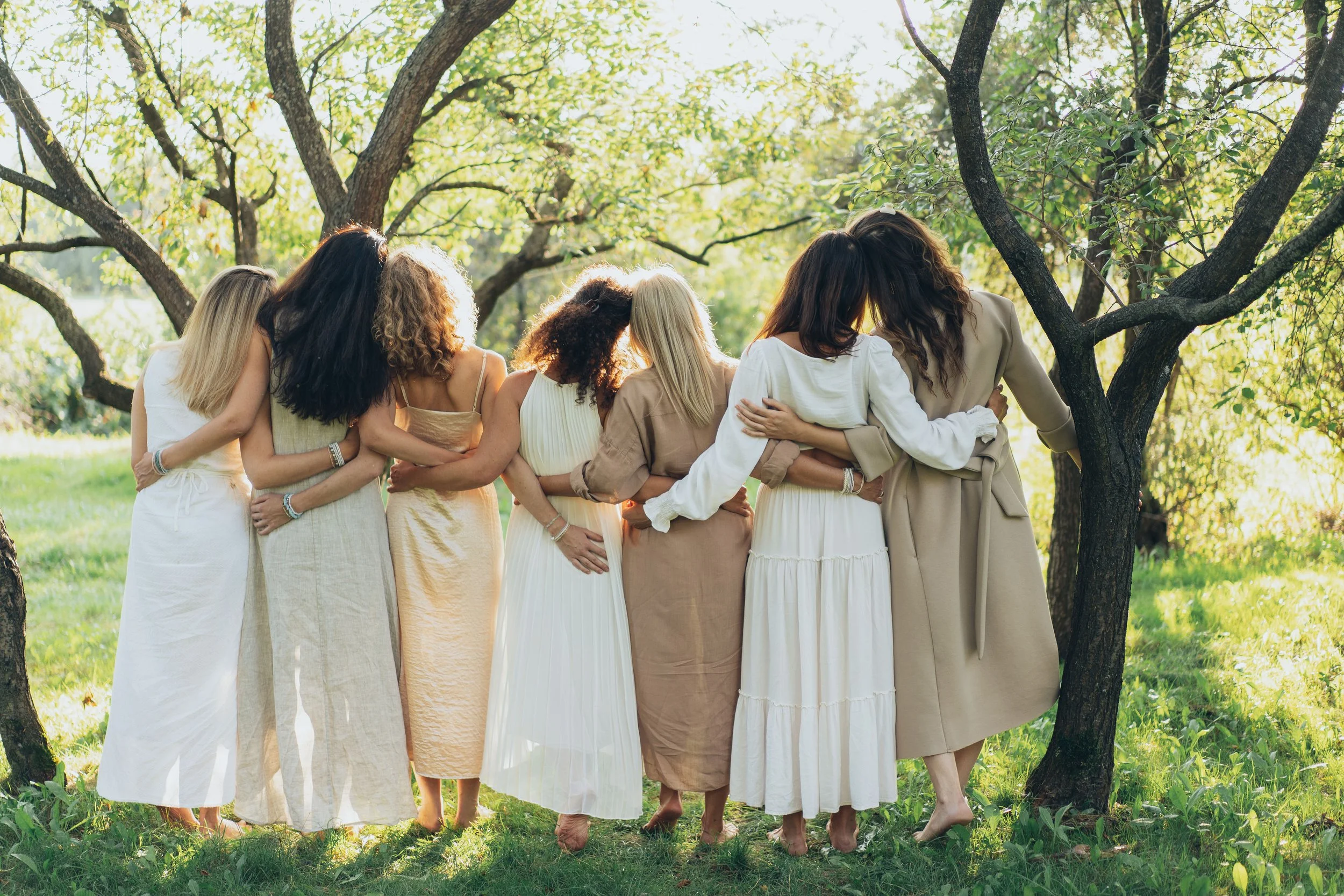
A circle of women stands in quiet unity beneath the trees—a modern echo of the Beguines, rooted in sisterhood, mysticism, and sacred remembrance.
As I was immersed in the second year of my Magdalene Rose Priestess studies, a quiet yet undeniable remembering began to stir—an awareness of a life once lived, still revealing itself to me in layers and whispers to this day. I have long trusted that when the soul is ready, the teacher appears, and the lesson arrives precisely when it can carry us forward on our path of becoming. In this season of deepening, the Universe placed Marguerite Porete in my awareness, along with her luminous and dangerous text, The Mirror of Simple Souls, and through her, the forgotten world of the Beguines unfolded before me. What I encountered was not merely history, but recognition—a lineage of women who lived devoted, mystical, sovereign lives rooted in divine intimacy rather than institutional permission. Their voices felt familiar, their courage intimate, as though they were not only calling to be remembered but inviting us—now—to remember ourselves.
Exploring the Sacred Parallels Between the Beguines, Priestess Traditions, and the Magdalene Lineage
Throughout history, women have continually answered the call to live lives devoted to the Sacred—often outside the boundaries sanctioned by religious institutions. Among the most remarkable examples of this spiritual courage were the Beguines, a powerful movement of medieval women who embodied mysticism, service, autonomy, and divine
intimacy. Though largely absent from mainstream history books, the Beguines were not anomalies. They were part of a long lineage of priestess-like women, echoing ancient feminine wisdom traditions and foreshadowing what many today recognize as Magdalene consciousness—a path of embodied spirituality, sacred service, and inner authority.
Who Were the Beguines?
The Beguines arose in 12th- and 13th-century Europe, primarily in present-day Belgium, the Netherlands, France, and Germany. They were lay religious women who dedicated their lives to God without taking permanent vows and without entering convents. This choice alone was revolutionary.
Beguines lived lives rooted in:
Deep contemplative prayer
Mystical union with the Divine
Service to the sick, poor, and marginalized
Community living balanced with personal sovereignty
Unlike nuns, Beguines could:
Own property
Earn income through teaching, weaving, nursing, or healing work
Remain connected to society
Leave the Beguine path if their calling changed
Their lives blended spiritual devotion and worldly engagement, creating a model that
feels strikingly modern.
Beguinages: Sacred Feminine Communities
Many Beguines lived in beguinages—intentional spiritual communities composed of small homes, gardens, chapels, and communal spaces. These were not cloistered monasteries but open sanctuaries within cities, allowing Beguines to live as contemplatives while remaining accessible to those in need.
These communities functioned much like:
Ancient temple priestess dwellings
Sacred mystery schools for women
Early forms of spiritually centered co-housing
Within beguinages, women studied scripture, shared mystical insight, cared for the vulnerable, and supported one another in spiritual formation—without male oversight.
Beguine Mysticism: Direct Experience of God
The Beguines were known for their bold mystical theology, which emphasized direct personal experience of God over external authority. Many wrote in the vernacular, making sacred wisdom accessible beyond clergy and scholars.
Notable Beguine mystics include:
Hadewijch of Brabant, whose writings describe divine love as an all-consuming force that transforms the soul
Mechthild of Magdeburg, author of The Flowing Light of the Godhead, a luminous account of ecstatic union with the Divine
Marguerite Porete, whose book The Mirror of Simple Souls taught spiritual freedom beyond rules—leading to her execution in 1310
Their voices echoed a timeless truth: the Divine is encountered within, not mediated solely through hierarchy.
Parallels Between the Beguines and Priestess Traditions
Long before Christianity, priestesses served as mediators between the seen and unseen worlds. They tended sacred fires, offered healing, preserved wisdom, and embodied devotion through daily life. The Beguines carried this ancient feminine archetype forward disguised within Christian language but unmistakable in essence.
Key parallels include:
Spiritual authority rooted in inner knowing
Embodied devotion expressed through service and care
Community-based feminine leadership
Sacred work woven into everyday life
Like priestesses, Beguines lived as bridges—holding space for transformation, healing, and divine presence within their communities.
Beguines and the Magdalene Lineage
Many modern scholars and mystics see clear resonance between the Beguines and the Magdalene tradition—a spiritual lineage honoring Mary Magdalene as a teacher, mystic, and embodiment of sacred feminine wisdom.
Shared themes include:
Intimate, heart-centered devotion
Emphasis on love as the path to God
Spiritual sovereignty beyond institutional control
Integration of contemplation and action
Like Mary Magdalene, Beguines were often misunderstood, marginalized, or condemned—not for lack of faith, but for too much spiritual freedom.
Suppression and Survival
As their influence grew, so did suspicion. Church authorities increasingly viewed Beguines as dangerous—not because they rejected God, but because they demonstrated that women could access divine truth without permission. By the 14th century, some Beguine communities were disbanded, and certain teachings labeled heretical. Yet the movement never fully disappeared. In quiet ways, the Beguines endured—leaving behind writings, sacred spaces, and a legacy of courage that still whispers to awakened souls today.
Why the Beguines Matter Now
The Beguines speak directly to modern seekers—especially women—who feel called to live spiritually rich lives outside rigid structures. They offer a living blueprint for:
Spiritual autonomy without isolation
Devotion rooted in love rather than fear
Community grounded in mutual empowerment
Sacred service as a daily practice
In a time when many are reclaiming priestess wisdom and Magdalene consciousness, the Beguines remind us: this path has always existed.
A Call to Remember
The Beguines were not rebels without faith. They were faithful without fear—women who trusted divine intimacy more than external approval. Their story invites us to remember our own sacred calling:
To live devoted lives.
To trust inner wisdom.
To serve from love.
To walk freely with the Divine.
If these words have stirred something within you, take a moment to explore our Magdalene Rose Priestess Path—a supportive, spiritually rich journey of growth, healing, and devotion. Our next session begins on January 11, 2026.
Join our email list for thoughtful insights, seasonal teachings, and meaningful spiritual practices HERE
Learn more about our priestess path program designed for integration and embodiment HERE